Tuesday, May 13, 2014
Asparagus sandwich
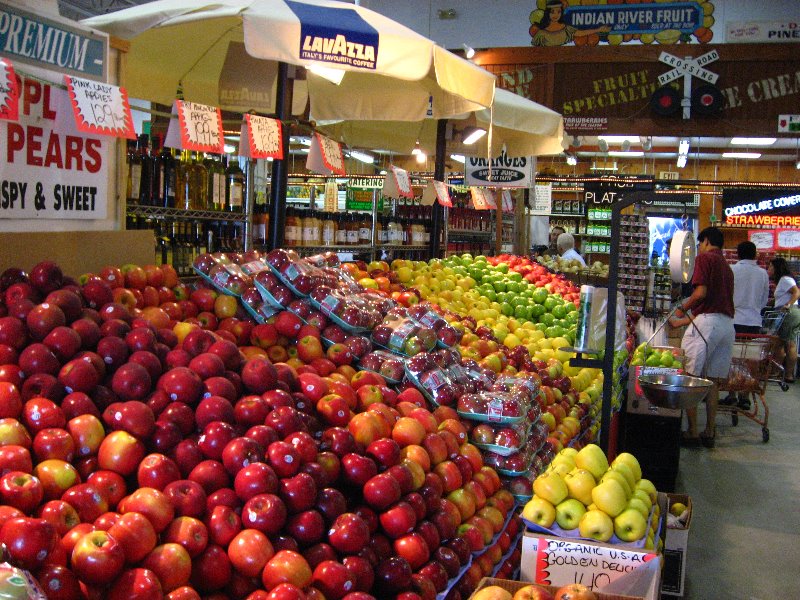
Yesterday I saw on Facebook an asparagus sandwich on the menu at the Carrot Barn in Schoharie, New York. I knew I had in my refrigerator a bunch of asparagus from The Boys Farmers' Market in Delray Beach, so I decided to try my own version. The Carrot Barn sandwich is described as steamed asparagus, cabot cheddar, scallions, mayo, salt and pepper on a French roll served warm.
Using what I had on hand, I made a sandwich containing mashed avocado instead of mayonaise, roasted red peppers (from a jar), fresh ground black pepper, scallions, steamed asparagus, sliced heirloom tomato from the CSA I belong to, and red leaf lettuce on a toasted sub roll from Publix. I thought it was outstanding. Next time I think I will cut the asparagus spears into pieces about two inches long instead of leaving them whole but I will not change another thing.
Friday, March 26, 2010
Locavores delight
Boxes awaiting pick up
This week when I went to my Green Cay CSA (Community Supported Agriculture) to pick up our vegetables, I took along my camera. Each member of the CSA who picks-up (as opposed to gets delivery) finds a labeled box on the table with their share for the week. The boxes are kept on tables under a canopy to help keep them fresh.
The crop just beginning to grow looks like corn to me and I am getting excited by the thought of some really fresh corn. Although we have had delicious corn from The Boys Market, I am sure that corn picked in the morning and driven 2 miles to my house and cooked for dinner will be the best we have had since we left Central New York. My house would not really be 2 miles from the pick up spot, if we could cross the canal and travel in a straight line through the fields. My house is just over the canal behind the silo in the back of the photo.
Once again, the heirloom cherry tomatoes were outstanding. We also received regular tomatoes, zucchini, broccoli, romaine, carrots, and bell peppers. J has discovered how good fresh raw vegetables taste with hummus, so the veggies disappear from the refrigerator. Although the weather has slowed the output a bit for this time of the year, we are still getting more than enough vegetables to last us until the next box arrives. In fact, there is the usual surplus of zucchini. Did you ever hear of a farm that didn't have lots of zucchini? I think I will have to make and freeze more zucchini muffins to be sure that I don't waste the food.
Sunday, March 14, 2010
A favorite meal revisited
When people ask me what I eat, I always tell them that I don't like things pretending to be meat, that I just don't miss meat that much. That is true - I really do not miss meat that much after over 6 years of not eating it. My husband, however, really does miss meat. He is wonderful about eating whatever I eat and trying to eat vegan foods so we can both be healthier. Because he is so good about it, I was eager to try the recipe for meatloaf in the Engine 2 Diet Cookbook by Rip Esselstyn, professional triathalon athlete, who is now an Austin Texas firefighter . The diet is based on whole foods, including whole grains, fresh fruits, vegetables, legumes, nuts, and seeds.
I prepared J for disappointment, even to having leftover pizza on hand just in case we were left without something to have for dinner if the meatloaf failed. No disappointment tonight. I have to say that this is one of the best recipes I have tried for something pretending to be meat. I served J his favorite meal: meatloaf, mashed potatoes with gravy, and lima beans. I added a salad of the heirloom tomatoes from the CSA, a few French breakfast radishes, thinly sliced sweet onion dressed with a teaspoon of olive oil and an excellent Italian red wine vinegar.
I searched in vain for a long time to find this recipe online and at last it has been posted on the Engine 2 Diet website.
Monday, March 8, 2010
Rediscovered treasure
Ada Dedell 1924, aged 42
The treasure part is that one of those recipes was her mother's recipe for Rhubarb pie. Ada's mother, Nellie Ruth Greenia, was born in 1855. This is the recipe for Nellie's Rhubarb Pie just in time for spring rhubarb in the northeast:
"Skin the rhubarb. Cut in 1/2 inch pieces. Fill the crust with the raw fruit and sprinkle liberally with sugar and 2 tablespoons flour. Bake about 3/4 hour."
When everyone cooked nearly every meal at home, it was assumed that the cook needed very little in the way of instruction. First my grandmother and then my mother expanded the instructions and now I am adding what I think is required for today's cook.
Rhubarb Pie Filling
3 cups rhubarb cut into 1-inch pieces
1 1/2 cups sugar
3 tablespoons flour
1 bottom and 1 top pie crust
Follow the instructions on the package for the pie crust. If you have made your own pie crust, you do not need to be told what to do.
Preheat the oven to 400 F.
Rinse the rhubarb and cut it into 1-inch pieces, removing and discarding any tough ends and all of the leaves. Combine the rhubarb, sugar and flour in a large bowl. Place the bottom crust in a pie pan. Pour the mixture into the bottom crust and cover with the top crust. Make a few slashes in the center of the top crust to allow steam to escape. Trim the crust to fit the pan and crimp the edges of the top and bottom crust together. Bake for 10 minutes at 400 and lower the heat to 350. Continue baking until the crust is golden brown. Cool on a rack and serve at room temperature.
Friday, March 5, 2010
Writing cookbooks
For years now I have been working on a healthy vegan cookbook. I began writing my first cookbook at the age of 10 and I still have that yellow-covered spiral-bound notebook, as well as the red-covered second one.
As you can see, the yellow one cost 50 cents, while the red one from some time later cost 49 cents. Until I looked at them through someone else's eyes (yours), I hadn't realized how awful they look all covered with the remains of my cooking with them for decades. The red one has pages of scribbling added by one of my children who took advantage of my attention being elsewhere to decorate my books with artwork. At the time, I was furious and now I cherish the scribbles. Isn't life funny that way?
That little digression is apropos of nothing except that it was part of my journey that brought me to writing my current cookbook. Right now I am working on a chapter of Greek foods because of a woman I sat next to on an airplane recently. She and I talked the entire flight about food. Actually, she talked and I listened to her describe the wonderful food she had learned to cook before arriving in America. Her children, now grown, were all born in the US, but their favorite foods are the traditional Greek foods she still cooks for them. Lucky them! She cooks and delivers food to their houses!
People say Mediterranean foods are so healthy. I say they are if the food is prepared and eaten the way it was a couple of generations ago. The woman on the plane told me about all of the wonderful vegetable dishes she cooks and that her family loves. Those are the recipes that I am working on now.
Even in the red notebook there is a recipe for Beefburgers Greek Style. I have no idea where I discovered it, but I remember cooking Greek-style burgers for the five of us at home when I was a teenager. My father, I am sure, would have much preferred a plain American hamburger, but he never once complained about my kitchen experiments.
As my cooking skills improved, I added moussaka and spanakopita to my repertoire with the help of a cookbook I received as a gift when the book was first published. My cookbook collection grew and by the time I was ready to move to Florida, I could only bring half of my cookbooks. One I needed now and no longer have was Greek Cooking For the Gods, by Eva Zane. I looked on Amazon, thinking it would probably be about $1 by now, but no, it now sells for $46.99 to $139.95.
And that brings me to what I really started out to say today, aren't public libraries the best? My local library obtained a copy for me, which I just brought home. And that is what sent me down memory lane, posting this message when I should be reading the recipe for Lopia Plaki or Lima Beans Plaka Style.
Sweet Potato Lunch
Thanks to Rip Esselstyn for Rip's Sweet Potato Bowl in The Engine 2 Diet book for the inspiration for this unusual salad. I had a huge sweet potato but I didn't have the mango or red bell pepper called for in Rip's recipe. So I improvised and ended up with a very tasty and quickly prepared lunch.
Ingredients per serving:
1 cup cooked sweet potato chunks, skin removed and discarded
3/4 cup cooked black beans, drained and rinsed
1/2 avocado, cut into bite size chunks
1/2 cup canned diced tomatoes with chopped green chilies
chopped cilantro
juice of 1/2 a lime
splash of balsamic vinegar
Take some already cooked sweet potato and cut it into chunks into about as big as you think you would like to place on a fork. If the potatoes are very cold, warm them in a microwave to about room temperature. Put the sweet potatoes into a bowl, add the beans, avocado, tomatoes, cilantro, lime juice and vinegar.
A healthy and satisfying lunch for a plant-strong diet.
Ingredients per serving:
1 cup cooked sweet potato chunks, skin removed and discarded
3/4 cup cooked black beans, drained and rinsed
1/2 avocado, cut into bite size chunks
1/2 cup canned diced tomatoes with chopped green chilies
chopped cilantro
juice of 1/2 a lime
splash of balsamic vinegar
Take some already cooked sweet potato and cut it into chunks into about as big as you think you would like to place on a fork. If the potatoes are very cold, warm them in a microwave to about room temperature. Put the sweet potatoes into a bowl, add the beans, avocado, tomatoes, cilantro, lime juice and vinegar.
A healthy and satisfying lunch for a plant-strong diet.
Sunday, February 28, 2010
Pressure cooker chick peas
Another fine recipe based on one from Susan Voisin at Fat Free Vegan Kitchen! I cooked the chickpeas in the pressure cooker and have made real progress with learning to use it thanks to The Veggie Queen. This time I got all of the steps right and ended up with perfectly cooked chickpeas in a very short time.
I had half of a huge raw sweet potato leftover in the refrigerator and nearly a pound of okra that had to be used really soon. I found this recipe at Fat Free Vegan and changed it some, of course. First, I liked it much better without the peanut butter that the recipe says to add at the end of cooking. I tried it both ways because the broth tasted so good without it. I would not include it or the liquid smoke flavoring. With enough smoked paprika, the liquid smoke, which I do not have, was unnecessary. I had no green peppers either, only half a red pepper, so I made half of the recipe. The next time I would use a green pepper. I left the celery at 2 ribs, used regular diced tomatoes, and Sriracha Hot Sauce because I like the heat it gives to the food.
Although the recipe recommends cooking all of the ingredients until the sweet potatoes are close to falling apart, I found that after 90 minutes, they still were not near falling apart and finished the cooking at that time.
So this is what cooking is supposed to be like. Start with an idea, use what you have on hand and like to eat and then make the recipe your own.
Tuesday, February 23, 2010
Chili with pressure cooker beans
It's my same old 1970's recipe for chili, updated to remove the meat and fat and now made with (mostly) pressure cooker beans. One of the best ways to avoid the BPA in canned vegetables and beans is to avoid the canned products themselves. So yesterday, I used my pressure cooker to make pinto beans and kidney beans for chili. I say (mostly) pressure cooker beans because I could not find dried dark red kidney beans at the grocery stores in my area. Dark red kidney beans taste so much richer than regular red kidney beans that I had to add one can of them to the chili. At least I reduced exposure to BPA by a lot and maybe next time I will leave out the dark red beans.
I am still a novice with the pressure cooker so I looked for help in cooking beans. Jill Nussinow, the Veggie Queen, has a blog, "Green Cooking in a Pressure Cooker" and dvd's with instructions. The most useful and most accessible information was provided by Miss Vickie . It was a great help with the steps and timing, but some experience is necessary. I didn't remember to turn down the burner once pressure was reached so the beans were unevenly cooked with some still quite hard and some already mushy. But, guess what? They tasted fine after stove top cooking for an hour this morning.
I really like the speed of food preparation with the pressure cooker, so I will try it again.
ADDITION
Thank you to Jill Nussinow, The Veggie Queen, for a link to her video on how to cook beans. Jill tells you everything you need to know about the basics of pressure cooking beans in just over 2 minutes.
Labels:
Chili and rustic bread,
healthy food,
pressure cooker,
vegan
Friday, February 19, 2010
Green Cay Open House
On Valentine's Day there was an open house at the CSA we belong to. The farm is about a mile from our house by car and much closer if we could walk and there wasn't a canal between us. That is really really local. It was a beautiful sunny day, cool, of course, because that is the kind of winter we are having here in Florida.
We had signed up for the 11 AM tour, so we arrived a little early to deliver our contribution to the potluck lunch and be sure that we could get to the tour starting point in time. We were warmly greeted by the farmer, Nancy and her husband. The event was very well organized and went perfectly. With the tour beginning at 11 and ending at about noon.
We walked to the fields and up and down rows as Nancy explained some of the challenges of growing produce: insects, rabbits, the weather. They now have some electric fencing to try to keep the rabbits from eating all of the green beans. I like it that they use organic methods whenever possible. I also liked it that we had the opportunity to pick cherry tomatoes (lots of cherry tomatoes) and some greens as well.
It was fun to meet other members of the CSA and to talk about what they cook with the fabulous vegetables we are getting in our boxes. After a tasty lunch, we said good bye and drove 3 minutes back home.
Tuesday, January 12, 2010
Green Cay Heirloom Tomatoes
The cold weather in Florida has caused considerable damage to agricultural crops, but the CSA I belong to has not had extensive loss of vegetables in the fields. I had been worried about it, of course, because as a member of a CSA, I have made a commitment to the farm and that makes it so much more real. Remember hearing about the citrus crops that might be lost because of the freeze? If you are like me, you thought, "Oh, that's too bad." and went right back to what you had been doing.
I am not saying that my concern about the loss is anywhere near the concern of the farmer whose money, sweat and worries are all wrapped up in the farm. It is just that now that I have a share in a farm, losing the crop would mean that people who have entered my life are having a bad time and I would not have the wonderful heirloom tomatoes you see in the photo.
Today was my first day to pick up my box in quite a while because of the holiday season and I was thrilled to return home with a box overloaded with fresh vegetables grown 1 mile from my house. In addition to the cherry tomatoes and arugula in the photo, I received red cabbage, kale, summer squash, green beans, French breakfast radishes, yellow and orange carrots, and fennel.
The summer squash will become muffins. The red cabbage is going to be a coleslaw with rice wine vinegar dressing, and the green beans my favorite vegetable dish, and the kale will be perfect in beans and greens.
It may be cold in Florida, but we still can enjoy local vegetables in January.
Labels:
csa,
Delray Beach,
local foods,
meal planning,
muffins
Sunday, January 10, 2010
More soba noodles
Soba noodles with vegetables and sesame seeds
Soba noodles keep calling to me. This salad is bursting with the flavors of ginger and lime juice.
What an excellent salad to eat at room temperature, the way I like to eat food. The salad could also be chilled in the refrigerator and eaten cold. Since the vegetables remain raw, it is important to keep in mind the size of the pieces that will be combined with the noodles. You will want them large enough to have a taste, but not so large that they are difficult to eat.
juice of 1 medium lime
¼ cup reduced sodium Tamari
1 tablespoon toasted sesame oil
1 tablespoon sugar
1 jalapeno pepper, finely diced
1 tablespoon peeled and grated ginger
3 garlic cloves, pressed
3 ounces fresh spinach, washed, stemmed and coarsely chopped
½ small head red cabbage, shredded
3 medium carrots, shredded
1 red bell pepper, finely diced
1 small cucumber, peeled and finely diced
6 scallions, thinly sliced
1 10-12-ounce package soba noodles
2 tablespoons sesame seeds or Gomasio
Prepare the vegetables and set them aside.
In a large pot of boiling water, cook the soba noodles according to the package instructions, being careful not to overcook them. Drain and set aside.
In a small food processor, buzz the lime juice, Tamari, sesame oil, sugar, jalapeno, ginger and garlic for about a minute. Pour the dressing over the noodles in a large serving bowl, tossing to coat them well.
Add the remaining ingredients including the sesame seeds and toss to combine.
Serve immediately or chill to serve as a cold salad.
Serves 4 - 6
Soba noodles keep calling to me. This salad is bursting with the flavors of ginger and lime juice.
What an excellent salad to eat at room temperature, the way I like to eat food. The salad could also be chilled in the refrigerator and eaten cold. Since the vegetables remain raw, it is important to keep in mind the size of the pieces that will be combined with the noodles. You will want them large enough to have a taste, but not so large that they are difficult to eat.
juice of 1 medium lime
¼ cup reduced sodium Tamari
1 tablespoon toasted sesame oil
1 tablespoon sugar
1 jalapeno pepper, finely diced
1 tablespoon peeled and grated ginger
3 garlic cloves, pressed
3 ounces fresh spinach, washed, stemmed and coarsely chopped
½ small head red cabbage, shredded
3 medium carrots, shredded
1 red bell pepper, finely diced
1 small cucumber, peeled and finely diced
6 scallions, thinly sliced
1 10-12-ounce package soba noodles
2 tablespoons sesame seeds or Gomasio
Prepare the vegetables and set them aside.
In a large pot of boiling water, cook the soba noodles according to the package instructions, being careful not to overcook them. Drain and set aside.
In a small food processor, buzz the lime juice, Tamari, sesame oil, sugar, jalapeno, ginger and garlic for about a minute. Pour the dressing over the noodles in a large serving bowl, tossing to coat them well.
Add the remaining ingredients including the sesame seeds and toss to combine.
Serve immediately or chill to serve as a cold salad.
Serves 4 - 6
Saturday, November 14, 2009
Soba Noodles with gingered bok choy
The bok choy from my CSA has inspired me to adapt a recipe I found for bok choy over soba noodles. A big fan of these Japanese buckwheat noodles, I can never seem to get enough of them. For two days in a row, I have made this dish for my lunch. But the recipe still isn't quite right, so I have to keep trying before I have a recipe I want to share.
If you happen to have Rip Esseltyn's "Engine2 Diet: the Texas Firefighter's 28-day Save-Your-Life Plan that Lowers Cholesterol and Burns Away the Pounds," you will find a recipe in that book. I prefer not to have the flavors of the brown rice vinegar and mirin Rip uses in that recipe. However, that is such a matter of personal taste that you may find Rip's recipe perfect for you just the way he wrote it.
Rip was one of the great presenters at the Healthy Lifestyle Expo I attended last month in Woodland Hills, California. It was so worthwhile and inspirational that I hope to attend again in 2010.
Thursday, October 29, 2009
Food memories of Schav
Anna’s Schav
For years my husband has talked about his memories of schav, a cold Russian soup his mother made for summer time meals when he was growing up. She also made Borscht, which he liked but not as much as he liked her schav. Neither of those soups were in my cooking repertoire and concerned that no soup I made could make would live up to the soup of his memory, I never tried. Until yesterday when I received a large bunch of Swiss Chard from my CSA.
I researched schav recipes in my cookbook collection and on the web. I interviewed Jerry about what he remembered of the soup. I knew the recipe I ended up with would not include the traditional sour cream or the optional eggs and milk. I thought I could create a close approximation to the remembered soup using the chard instead of the more traditional sorrel. And it worked. I was surprised and pleased that my soup received praise for being so much like Anna’s soup of decades ago.
Anna cooked without recipes, carrying her ideas entirely in her head. The family says that wherever Anna was became the family gathering place. Although I never had the opportunity to meet her, I think it would please her to have others enjoying her schav.
4 cups water
½ teaspoon dried dill
5 scallions, 2 chopped for cooking, 3 chopped for garnish
1 pound Swiss Chard
salt and ground black pepper to taste
1 small cucumber, chopped for garnish
3 radishes, chopped for garnish
Wash the chard well by partially filling the sink with water, gently swishing the chard around and then lifting the chard from the water. Repeat 2 more times. This method leaves the sand and dirt behind. Remove the tough stems and chop the leaves into pieces about one-inch square.
In a soup pot, bring the water to a boil and add the chard, dill, 2 of the chopped scallions and cook for about 5 minutes. Add the chard and simmer for about 10 minutes or until the greens are very soft, but still holding together well.
Remove from the heat and season with salt and pepper.
Chill and serve in bowls with the chopped cucumber, radishes, and scallions.
Serves 3-4
For years my husband has talked about his memories of schav, a cold Russian soup his mother made for summer time meals when he was growing up. She also made Borscht, which he liked but not as much as he liked her schav. Neither of those soups were in my cooking repertoire and concerned that no soup I made could make would live up to the soup of his memory, I never tried. Until yesterday when I received a large bunch of Swiss Chard from my CSA.
I researched schav recipes in my cookbook collection and on the web. I interviewed Jerry about what he remembered of the soup. I knew the recipe I ended up with would not include the traditional sour cream or the optional eggs and milk. I thought I could create a close approximation to the remembered soup using the chard instead of the more traditional sorrel. And it worked. I was surprised and pleased that my soup received praise for being so much like Anna’s soup of decades ago.
Anna cooked without recipes, carrying her ideas entirely in her head. The family says that wherever Anna was became the family gathering place. Although I never had the opportunity to meet her, I think it would please her to have others enjoying her schav.
Schav
4 cups water
½ teaspoon dried dill
5 scallions, 2 chopped for cooking, 3 chopped for garnish
1 pound Swiss Chard
salt and ground black pepper to taste
1 small cucumber, chopped for garnish
3 radishes, chopped for garnish
Wash the chard well by partially filling the sink with water, gently swishing the chard around and then lifting the chard from the water. Repeat 2 more times. This method leaves the sand and dirt behind. Remove the tough stems and chop the leaves into pieces about one-inch square.
In a soup pot, bring the water to a boil and add the chard, dill, 2 of the chopped scallions and cook for about 5 minutes. Add the chard and simmer for about 10 minutes or until the greens are very soft, but still holding together well.
Remove from the heat and season with salt and pepper.
Chill and serve in bowls with the chopped cucumber, radishes, and scallions.
Serves 3-4
Labels:
csa,
Delray Beach,
family recipes,
fat-free,
soups,
vegan
Wednesday, September 23, 2009
Veggies4U (make that for me!)
The area just north of where I live is called Boynton Beach and in Boynton Beach there is a CSA, Community Supported Agriculture. The Florida Department of Agriculture and Community Services describes a CSA as
"a partnership between farmers and consumers. In conventional agriculture, the farmer bears all the risk of production, but CSA allows farmers to share farming’s risks—and its rewards—with consumers. CSA revolves around a community of people who pledge their financial support to a farm. At the beginning of the growing season, members pay a fee to cover the cost of the farm’s operations and the farmer’s salary. In return, each member receives a weekly share of the farm’s bounty—typically a box of fresh vegetables and herbs, though the box might also include fruit, honey, eggs, and even meat. For farmers, CSA offers a fair, steady source of income—and a way to revitalize the small family farm. Consumers, on the other hand, get fresh, great-tasting produce grown in a sustainable manner by someone they know and trust."
It lists only 10 CSA's in all of Florida, so I am really lucky to have one nearby. Last year I applied to become a member of Green Cay Produce/Farming Systems Research Inc., the CSA in Boynton Beach. There are more people who want to be members than the Farm can accomodate, however, so I was placed on a waitlist and never did get a chance to join. This year, I was watching for the announcement that applications for membership were being accepted and this year, I was in time. Hurray! I am now a member of a CSA.
I will receive a box of just harvested vegetables on an established schedule and I opted to pick up at the Farm myself rather than have the box delivered to my home. I received driving directions from the Farm and was astonished at the location. The Farm nearly adjoins the gated community I live in. My produce is going to have an incredibly low number of miles to travel from growing field to my kitchen!
So I will receive really fresh produce grown with minimal chemicals (this is Florida!) and I will be supporting a local farm. When my farmer son starts a CSA in upstate New York, I hope there will be lots of people like me who sign up to support him.
"a partnership between farmers and consumers. In conventional agriculture, the farmer bears all the risk of production, but CSA allows farmers to share farming’s risks—and its rewards—with consumers. CSA revolves around a community of people who pledge their financial support to a farm. At the beginning of the growing season, members pay a fee to cover the cost of the farm’s operations and the farmer’s salary. In return, each member receives a weekly share of the farm’s bounty—typically a box of fresh vegetables and herbs, though the box might also include fruit, honey, eggs, and even meat. For farmers, CSA offers a fair, steady source of income—and a way to revitalize the small family farm. Consumers, on the other hand, get fresh, great-tasting produce grown in a sustainable manner by someone they know and trust."
It lists only 10 CSA's in all of Florida, so I am really lucky to have one nearby. Last year I applied to become a member of Green Cay Produce/Farming Systems Research Inc., the CSA in Boynton Beach. There are more people who want to be members than the Farm can accomodate, however, so I was placed on a waitlist and never did get a chance to join. This year, I was watching for the announcement that applications for membership were being accepted and this year, I was in time. Hurray! I am now a member of a CSA.
I will receive a box of just harvested vegetables on an established schedule and I opted to pick up at the Farm myself rather than have the box delivered to my home. I received driving directions from the Farm and was astonished at the location. The Farm nearly adjoins the gated community I live in. My produce is going to have an incredibly low number of miles to travel from growing field to my kitchen!
So I will receive really fresh produce grown with minimal chemicals (this is Florida!) and I will be supporting a local farm. When my farmer son starts a CSA in upstate New York, I hope there will be lots of people like me who sign up to support him.
Wednesday, July 22, 2009
35 new salads to make
Now that your garden and your local farmers' market are overflowing with with fruits and vegetables, you have a perfect way to eat the bounty in salads. Mark Bittman, in his New York Times Minimalist column, has written 101 "recipes" of just 2 or 3 lines describing inventive combinations of ingredients and dressings. Many of them are vegan and most are vegetarian.
The first one combines cubed watermelon with tomato chunks with basil and vinaigrette. The second features wedges of tomatoes, peaches, slivers of red onion, crushed red pepper, and cilantro with an oil and citrus dressing.
There are 33 that I want to make! This could be half of my menu planning for the rest of the summer and beyond.
What is your favorite?
The first one combines cubed watermelon with tomato chunks with basil and vinaigrette. The second features wedges of tomatoes, peaches, slivers of red onion, crushed red pepper, and cilantro with an oil and citrus dressing.
There are 33 that I want to make! This could be half of my menu planning for the rest of the summer and beyond.
What is your favorite?
Labels:
farmers' market,
healthy,
healthy food,
local foods,
meal planning,
salads,
vegan
Monday, July 20, 2009
Addicted to Green Beans
How can it be possible that I am addicted to green beans? Have you ever experienced a craving for a food that is so strong it is almost an addiction?
I suppose I am not exactly addicted to green beans, but in reality I just cannot get enough of green beans prepared in a manner that I am calling Greek because it makes me remember our great meal at Scholarhio in Athens. The recipe is in Donna Klein's "Vegan Italiano." I tried improving on the recipe by making the dish with grape tomatoes since I have long had a recipe for green beans using those little tomatoes. For some reason, the little ones just don't release the strong flavors the way a large beefsteak tomato does. This recipe is changed from the original only in halving the olive oil and tilting the bean/tomato ratio more toward tomatoes. Calling for just a few ingredients, the recipe's flavor payoff comes from cooking for an hour. You would think that by the time the beans had stewed for that long you would have a mushy mass turning grey and lacking in taste. Fortunately, the green beans remain quite green and the taste takes me back to the Plaka.
I served the beans with oven-roasted Greek potatoes and a Greek salad.
Here is Donna Klein's recipe. If you like this one, you will like many others in the Italiano cookbook and "The Mediterranean Vegan Kitchen."
1 Tablespoon olive oil
1 pound fresh green beans, trimmed
1 large tomato, seeded and chopped
2 large garlic cloves, pressed
½ teaspoon dried oregano
grind of sea salt
grind of black pepper
water as needed
In a large non-stick skillet with a lid, cook the green beans in the oil over medium-high heat, stirring and tossing often, about 5 minutes. Reduce the heat to medium-low and add the remaining ingredients, stirring well. Cover and cook until beans are very tender, about 1 hour, stirring occasionally and adding water as necessary to keep the mixture from drying out. Tastes fabulous warm or at room temperature (Florida room temperature!)
Off to The Boys Farmers Market to buy... green beans to make this again!
I suppose I am not exactly addicted to green beans, but in reality I just cannot get enough of green beans prepared in a manner that I am calling Greek because it makes me remember our great meal at Scholarhio in Athens. The recipe is in Donna Klein's "Vegan Italiano." I tried improving on the recipe by making the dish with grape tomatoes since I have long had a recipe for green beans using those little tomatoes. For some reason, the little ones just don't release the strong flavors the way a large beefsteak tomato does. This recipe is changed from the original only in halving the olive oil and tilting the bean/tomato ratio more toward tomatoes. Calling for just a few ingredients, the recipe's flavor payoff comes from cooking for an hour. You would think that by the time the beans had stewed for that long you would have a mushy mass turning grey and lacking in taste. Fortunately, the green beans remain quite green and the taste takes me back to the Plaka.
I served the beans with oven-roasted Greek potatoes and a Greek salad.
Here is Donna Klein's recipe. If you like this one, you will like many others in the Italiano cookbook and "The Mediterranean Vegan Kitchen."
1 Tablespoon olive oil
1 pound fresh green beans, trimmed
1 large tomato, seeded and chopped
2 large garlic cloves, pressed
½ teaspoon dried oregano
grind of sea salt
grind of black pepper
water as needed
In a large non-stick skillet with a lid, cook the green beans in the oil over medium-high heat, stirring and tossing often, about 5 minutes. Reduce the heat to medium-low and add the remaining ingredients, stirring well. Cover and cook until beans are very tender, about 1 hour, stirring occasionally and adding water as necessary to keep the mixture from drying out. Tastes fabulous warm or at room temperature (Florida room temperature!)
Off to The Boys Farmers Market to buy... green beans to make this again!
Thursday, July 16, 2009
Farmers' Markets
Last Fall's Selection
The top reasons to visit a farmers' market near you
1. You help grow the local economy. Money spent locally tends to remain in the local community.
2. You support small farmers who are committed to providing you with fresh, high quality food.
3. You get to personally know the people who grew the food, baked the bread, and knit the sweater.
4. You take home fresh and probably healthier produce and products.
5. You will have fun.
6. You don't need a shopping list. Just take home the freshest and the best and plan meals around your purchases.
7. If you are lucky enough to be in the Albany NY area, you can visit the Capital District Market at 381 Broadway in Menands.
The Menands market is open to the public on Saturdays from May through October from 8 AM to 1 PM. In addition to Schoharie Valley Farms (The Carrot Barn), other vendors include an Amish baker, several crafts vendors, a bread baker, and other fruit and vegetable vendors. Saturday, July 25 will be the Corn Festival, but every weekend there are wonderful reasons to visit.
At the Schoharie Valley Farms booth, in addition to the vegetables, Stony Brook Farm sells pasture-raised and grass-fed pork, lamb and chicken. And the handsome young farmer who raises the animals is my son, so say hello from The Quilted Cook.
1. You help grow the local economy. Money spent locally tends to remain in the local community.
2. You support small farmers who are committed to providing you with fresh, high quality food.
3. You get to personally know the people who grew the food, baked the bread, and knit the sweater.
4. You take home fresh and probably healthier produce and products.
5. You will have fun.
6. You don't need a shopping list. Just take home the freshest and the best and plan meals around your purchases.
7. If you are lucky enough to be in the Albany NY area, you can visit the Capital District Market at 381 Broadway in Menands.
The Menands market is open to the public on Saturdays from May through October from 8 AM to 1 PM. In addition to Schoharie Valley Farms (The Carrot Barn), other vendors include an Amish baker, several crafts vendors, a bread baker, and other fruit and vegetable vendors. Saturday, July 25 will be the Corn Festival, but every weekend there are wonderful reasons to visit.
At the Schoharie Valley Farms booth, in addition to the vegetables, Stony Brook Farm sells pasture-raised and grass-fed pork, lamb and chicken. And the handsome young farmer who raises the animals is my son, so say hello from The Quilted Cook.
Tuesday, July 14, 2009
Pizza!!
Vegan pizza and so easy. As much as I like to cook, I have never been happy with pizza I have made at home. So I am always glad to hear J say that it is Tuesday and pizza is on sale at our favorite local pizzeria.
While J orders and picks up the pizza, I brown sliced onions on a baking sheet in a tiny bit of oil in a 350 degree oven. When the onions are nearly done, I halve grape tomatoes and put them on the baking sheet to sit in a turned off oven until we are ready to eat. I chop and steam broccoli florets.
When the pizza arrives, I top it with a sprinkle of Nutritional Yeast, a very little crushed red pepper, chopped black olives, capers, cooked broccoli, and the onions and tomatoes. And I even have time to take a photo and blog about it.
Every cook deserves a day off once in a while, don't you think?
Wednesday, July 8, 2009
Sukiyaki
I first cooked sukiyaki in the early 1970's. Of course, back then as a serious carnivore, I started with slicing beef. I think the recipe was originally one of Craig Claiborne's in The New York Times Cookbook, but I have changed it over the years. A fan of quick cooking meals, my son still phones me from a grocery store to ask me what ingredients to buy to cook sukiyaki.
Today's recipe is a healthier version of sukiyaki with vegetable broth and tofu instead of meat. Without the meat and meat flavored broth, the taste of the fresh vegetables shines through. A one-pot stew served over either noodles or rice, this is a fast and easy meal to prepare. I served it over half a package of soba noodles, thin Japanese noodles made from buckwheat flour. The recipe with a whole package of noodles is supposed to serve 4 people, but 2 of us ate it all.
Sukiyaki
8 ounce package of soba noodles1 tablespoon vegetable oil
1 large onion, peeled and sliced in rings
1 bunch scallions, cut on the diagonal into 3-inch pieces
8 large white mushrooms, cleaned and sliced
1 can sliced bamboo shoots, drained and rinsed
½ cup Tamari or soy sauce
½ cup Mirin
1/2 cup low-sodium vegetable broth (optional)
1 large bunch fresh spinach, well-washed and thick stems removed
1/2 pound extra-firm tofu, drained and cut into 3/8 inch slices
Boil water in a large pot to use to cook the soba noodles. The noodles will take only about 6-8 minutes to cook, so during the time you are cooking the vegetables, you will put the noodles into the boiling water and cook according to the package instructions. After the noodles are cooked, you will drain them and set them aside until the stew has finished cooking.
In a large non-stick skillet over medium heat, cook the onion slices in the oil until they begin to soften. Add the scallions, mushrooms and bamboo shoots and continue to cook for about 3 minutes. Stir in the Tamari and mirin. Layer the spinach on top. If you would like more broth, you can add 1/2 cup vegetable stock. Cover the skillet and cook about 10 minutes until the spinach is wilted. Place tofu on top and cook covered until the tofu is warm.
Serve over the cooked noodles.
Monday, July 6, 2009
Too many bananas!
Here in Delray Beach, The Boys Farmers Market is famous for the outstanding selection of produce, the high quality prepared foods and baked goods, and the insanity of the crowds in such a small space. Outside The Boys, there is a stand where they sell their overstock and over-ripe produce for $1 a bag. Jerry always stops and checks it out to see what kind of bargains he can find. And they are bargains, perfectly usable food - if you can consume them right away. Often there are bananas in bags there and we do eat a lot of bananas. But, with half a dozen bananas waiting in the freezer to be used, this most recent purchase may have been too many bananas. I am trying not to waste food, which means I have to use up those overripe fruits today!
Breakfast was the first meal of my attempt and although we usually eat a lighter breakfast, this morning we had banana pancakes. My neighbor just yesterday gave me a copy of "La Dolce Vegan" by Sarah Kramer. I always try to research recipes on the Internet as well, and found several sites with recipes for banana pancakes, supposedly from the same book. However, the recipe in the book varies significantly from the recipe online attributed to Sarah Kramer's book. I have rewritten a recipe as I made it this morning.
Banana Pancakes
1 ½ cups whole wheat pastry flour
1 ½ teaspoons baking powder
dash of salt
1 cup “milk”
3 tablespoons vegetable oil
1 banana
2 tablespoons sugar
maple syrup
fresh blueberries
In a medium bowl, stir the flour, baking powder and salt together. In the bowl of a food processor, add the milk, oil, banana, and sugar and buzz until smooth. Pour the wet mixture into the flour mixture and stir gently until just combined. (About 20 circles around the bowl with a spoon.)
Heat a non-stick griddle or lightly oiled or non-stick frying pan over medium heat. Using a 1-cup measure or ladle, pour about 3/4 cup of batter for each pancake onto the pan. Be sure to leave enough room for the pancakes to expand and for flipping them over. Cover the pan and cook over medium heat until the centers start to bubble. The bottoms should be golden brown. Flip the pancakes over and cook on the other side for a couple of minutes. Keep cooked pancakes warm and repeat cooking process until the batter is gone.
Serve with maple syrup and a garnish of fresh blueberries.
Now what else am I going to do with nearly a dozen bananas?
Labels:
breakfast,
Delray Beach,
recipe,
The Boys Market,
vegan
Subscribe to:
Posts (Atom)